800 NAKHEEL
How Blue and Green Spaces Are Redefining Wellness Living in Dubai Communities
Wellness living in Dubai is increasingly shaped by access to nature, movement and outdoor comfort. This evolution reflects Dubai’s wider urban vision, with the Dubai 2040 Urban Master Plan aiming to double green and recreational areas and increase the length of public beaches by 400%.
For residential buyers, blue and green spaces are no longer lifestyle extras. They influence daily routines, family usability, long-term appeal and the quality of time spent outside the home.
Key Takeaways
- How Do Beachfront Blue-Space Communities and Inland Green-Space Communities Differ in the Wellbeing Benefits They Offer?
- Which Wellness-Community Features Do Residents Value Most, Including Green Space, Biophilic Design and Access to Water?
- What Should Buyers Compare When Assessing Outdoor Fitness Facilities Integrated with Parks and Waterfront Spaces?
- How Do Safety, Child-Friendly Open Space and Family Amenities Differ Across Wellness-Focused Communities?
- Which Features Make Walking and Cycling Routes Comfortable, Connected and Useful for Everyday Exercise?
- How Does Living in a Blue-and-Green Wellness Community Compare With Living in a Conventional High-Rise Development?
How Do Beachfront Blue-Space Communities and Inland Green-Space Communities Differ in the Wellbeing Benefits They Offer?
Beachfront blue-space communities offer wellbeing through proximity to water, open views, coastal movement and a stronger resort-like rhythm. The benefit is often experiential: morning walks by the sea, access to beaches, waterfront promenades and outdoor leisure that feels connected to the wider landscape.
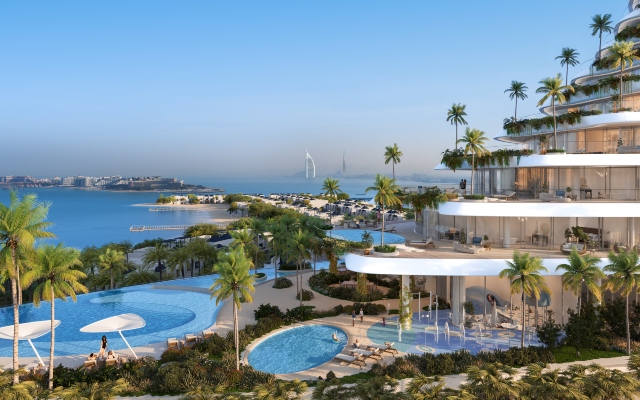
This is where a destination such as Dubai Islands is relevant. Its planning combines the blue-space value of waterfront and beach access with the green-space value of parks and open areas, which makes it a useful example of how coastal communities can support both leisure and everyday wellbeing. Dubai Islands is planned with over 60 kilometres of waterfront, over 20 kilometres of beaches, including a Blue Flag-certified beach, and almost two kilometres of parks, open spaces and premium golf courses overlooking the Arabian Gulf.
Inland green-space communities offer a different form of wellbeing. Their value usually comes from shaded parks, landscaped walkways, family gardens, children’s play areas and calmer neighbourhood pockets. These settings can support more regular everyday use because residents may rely on them for school runs, outdoor play, exercise and informalneighbourhood interaction.
The difference is not that one is healthier than the other. Blue-space communities often provide stronger sensory appeal and destination value, while green-space communities can offer more consistent daily convenience. The stronger choice depends on whether the buyer prioritises coastal leisure, family routine, walking comfort or a quieter residential setting.
Which Wellness-Community Features Do Residents Value Most, Including Green Space, Biophilic Design and Access to Water?
Residents usually value wellness features when they become part of daily routines, rather than occasional amenities. The most important features are accessible green areas, shaded walking routes, water access, usable parks, seating areas, play spaces and calm outdoor settings close to home.
Biophilic design also matters because it brings natural materials, planting, daylight, views and outdoor transitions into the residential experience. It is most effective when it is practical rather than decorative. A landscaped entrance is pleasant, but a shaded route to a park, pool, beach or community facility creates stronger everyday value.
Access to water has a different effect. It can support walking, relaxation and social activity while giving the community a more recognisable sense of place. For buyers, the question is whether these features are accessible, well maintained and integrated into the community plan.
What Should Buyers Compare When Assessing Outdoor Fitness Facilities Integrated with Parks and Waterfront Spaces?
Buyers should compare outdoor fitness facilities by usability, not by the number of amenities listed. A gym station, jogging path or cycling route has limited value if it is exposed, disconnected, poorly lit or too far from homes.
The first point to assess is location. Fitness facilities should sit along natural movement routes, such as waterfront promenades, park loops or shaded pathways, so exercise fits into daily routines. The second is comfort. Shade, seating, hydration points, lighting, wayfinding and surface quality affect whether residents use the space consistently.
The third is user mix. Families may need routes that allow walking with children, while active residents may prioritise longer loops, waterfront running routes or cycle-friendly connections. Within a residential community, the same principle applies at a smaller scale: fitness facilities should connect to the wider outdoor network, not sit in isolation.
How Do Safety, Child-Friendly Open Space and Family Amenities Differ Across Wellness-Focused Communities?
Safety and family usability depend on how open spaces are planned. A large park can be valuable, but families will judge it by visibility, access control, shaded seating, distance from roads, play equipment, lighting and the ease of supervision.
In beachfront communities, child-friendly planning should consider beach access, promenade safety, pool areas, pedestrian crossings and the separation between leisure zones and residential zones. In inland green communities, buyers should assess park distribution, walking routes, play areas, traffic calming and proximity to schools or daily essentials.
Family amenities also need to support different ages. Younger children need safe play and shaded areas. Older children need room for sport, cycling and independent movement. Adults need seating, walking routes and spaces that support neighbourhood connection.
Which Features Make Walking and Cycling Routes Comfortable, Connected and Useful for Everyday Exercise?
Walking and cycling routes become useful when they are comfortable enough to use regularly. In Dubai, that means shade, lighting, clear surfaces, safe crossings, logical distances and routes that connect homes with parks, retail, waterfronts and community facilities.
A comfortable route should also have purpose. A path that only loops around a landscape feature may be attractive, but a route that connects to a beach, park, school, clubhouse or retail area becomes part of daily life. This is where wellness design becomes practical. Residents are more likely to walk or cycle when the route replaces a short car journey, supports a fitness routine or turns everyday movement into a more enjoyable experience.
Connectivity also affects long-term community value. Dubai 2040 includes green corridors intended to connect service areas, residential areas and workplaces while supporting pedestrian, bicycle and sustainable mobility.
How Does Living in a Blue-and-Green Wellness Community Compare With Living in a Conventional High-Rise Development?
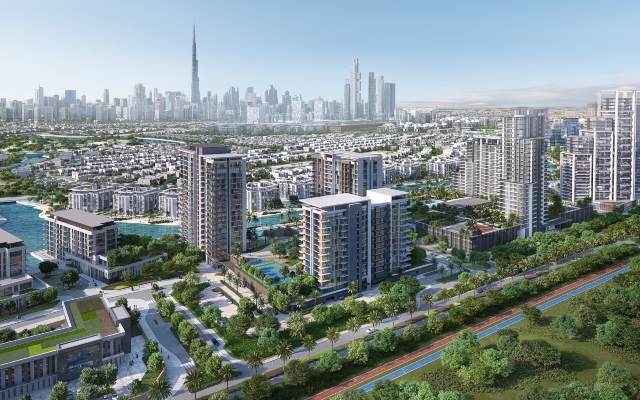
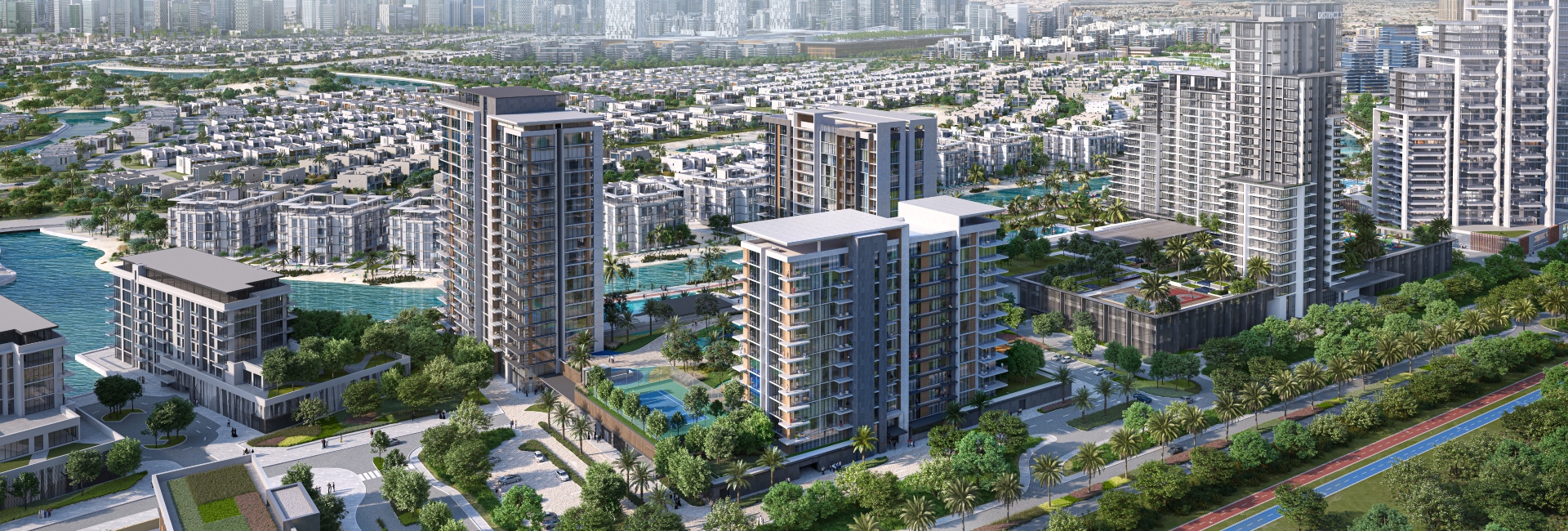
A blue-and-green wellness community usually offers a more outdoor-led residential experience. The home is supported by parks, waterfronts, shaded routes, landscaped spaces and open-air amenities that encourage movement outside the building. This can make daily wellbeing feel more natural, especially for families and residents who value outdoor routines.
A conventional high-rise development may offer convenience, views and shared amenities, but its wellness experience is often more building-centred. Residents may rely on an indoor gym, podium pool, lobby amenities or nearby public spaces rather than a wider neighbourhood landscape.
The comparison is not simply low-rise versus high-rise. The stronger question is whether the development supports everyday movement, outdoor comfort, family use and access to nature. A well-planned vertical development can still support wellness if it connects properly to parks, promenades and pedestrian routes. A blue-and-green community has an advantage when those features are built into the master plan and remain close enough to use every day.
Buyers can explore Nakheel communities shaped around waterfront access, landscaped parks and outdoor living, then compare the setting, amenities and home format that best support their family’s daily routine, lifestyle priorities and long-term plans.