800 NAKHEEL

How Investment Time Horizon Shapes Returns in Dubai Real Estate (3 vs 7 vs 15 Years)
Investment time horizon can significantly influence the way investors measure opportunity, risk, and value in Dubai real estate. A three-year hold is often shaped by entry price, resale liquidity, transaction costs, and market timing. A seven-year strategy gives the asset more time to benefit from rental income, community maturity, and infrastructure progress. A fifteen-year view places greater weight on scarcity, planning quality, and long-term buyer relevance.
Shorter horizons require precision and liquidity, while longer horizons reward assets that can remain desirable across market cycles. This makes the time horizon central to assessing Dubai property return on investment and the consistency of future returns.
Key Takeaways
- Why Time Horizon Changes the Return Profile
- The 3-Year Horizon: Timing, Liquidity, and Entry Price Matter Most
- The 7-Year Horizon: Market Cycles Become Easier to Absorb
- The 15-Year Horizon: Scarcity, Planning Quality, and Asset Relevance Dominate
- What Investors Should Compare Across 3, 7, And 15 Years
- Time Horizon Should Shape the Investment Decision
Why Time Horizon Changes the Return Profile
Dubai real estate returns are shaped by two main components: capital appreciation and rental income. Over a short period, capital movement can dominate results because prices may rise or soften quickly. Over longer periods, rental income, asset quality, maintenance discipline, and community maturity increasingly determine total return stability.
This is why investors should not judge Dubai property return on investment by headline yield alone. A high-yield apartment may suit a shorter income-led strategy, while a scarce villa or waterfront home may rely more on capital preservation and long-term appreciation. In 2025, Dubai’s gross rental yields stood at around 7.0% for apartments and 4.8% for villas and townhouses, highlighting how asset type shapes income versus appreciation weighting.
The 3-Year Horizon: Timing, Liquidity, and Entry Price Matter Most
A three-year investment horizon is the most sensitive to market timing. Investors have less time to absorb transaction costs, short-term supply changes, service charges, vacancy periods, and resale negotiation. In this window, buying at the wrong point in the cycle can reduce realised returns, even if the property is fundamentally strong.
For a three-year strategy, liquidity is often more important than maximum upside. Investors should prioritise areas with active resale demand, clear rental absorption, strong handover visibility, and limited direct competition. Off-plan investments may perform well if bought early in a credible development cycle, but they also depend heavily on construction progress, payment-plan discipline, and exit demand before or shortly after completion.
In this horizon, execution risk and exit depth carry more weight than long-term asset quality.
The 7-Year Horizon: Market Cycles Become Easier to Absorb
A seven-year horizon gives investors more room to benefit from both income and asset maturity. This period can capture a full phase of community development, from handover and occupancy growth to stronger retail, mobility, school access, hospitality, and lifestyle infrastructure.
Using Market Trends to Assess Demand Depth
This is where Dubai property market trends become more useful than short-term price movements. Investors can assess whether demand is broadening, whether rental values are supported by end-user needs, and whether the area is becoming harder to replicate. In 2025, villa values showed strong annual growth, with ValuStrat reporting 25.5% annual capital growth for villas, reflecting sustained demand for well-located, supply-constrained communities.
Balancing Rental Income with Long-Term Scarcity
A seven-year hold is also more forgiving because rental income can offset periods of slower price growth. The stronger assets are usually those where liveability and scarcity work together: accessible communities, clear amenity depth, quality public realm, and differentiated views or layouts.
At this stage, return composition becomes more balanced between income generation and capital appreciation, reducing dependence on precise market timing.
The 15-Year Horizon: Scarcity, Planning Quality, and Asset Relevance Dominate
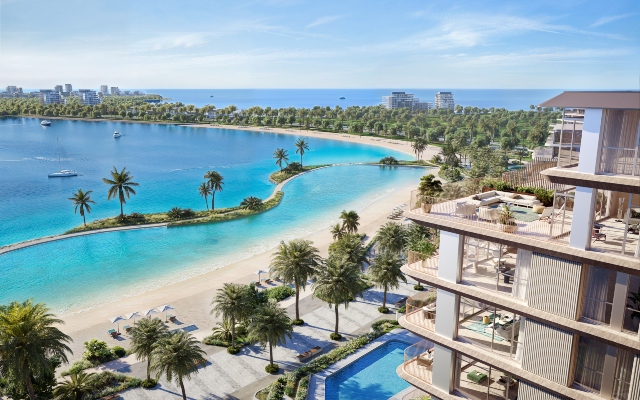
A fifteen-year horizon shifts the investment question from “what can be sold quickly?” to “what will remain desirable across cycles?” This is where planning discipline, land scarcity, waterfront access, infrastructure integration, and long-term resident demand become decisive.
Understanding How Scarcity Shapes Premium Buyer Demand
Premium buyers tend to value assets that are difficult to reproduce. Dubai’s ultra-luxury segment supports this pattern: 500 homes above US$10 million were sold in 2025, including 68 above US$25 million, with the total value of US$10 million-plus residential sales rising 27.7% to US$9.05 billion.
Prioritising Assets with Long-Term Relevance
For long-horizon investors, the best results rarely come from chasing short-term momentum. They come from acquiring assets with enduring relevance:
- Limited waterfront supply
- Strong master planning
- Privacy
- Connectivity
- Community services
- A resident base with long-term holding power
Over this timeframe, asset durability and brand-quality development tend to outweigh short-term pricing inefficiencies.
What Investors Should Compare Across 3, 7, And 15 Years
Investors should match the asset to the holding period. A short-term strategy should focus on liquidity, rental demand, and price entry. A medium-term strategy should consider community maturity, rental growth, and resale depth. A long-term strategy should focus on scarcity, planning quality, maintenance standards, and future buyer relevance.
Investors should assess service charges, net yield, expected vacancy, handover risk, comparable resale transactions, infrastructure delivery, and the number of similar homes competing for the same buyer. This creates a clearer view of risk-adjusted returns across different holding horizons, rather than headline appreciation alone.
Time Horizon Should Shape the Investment Decision
The strongest real estate strategy is based on how long the investor intends to stay exposed to that cycle. A three-year investor needs liquidity and disciplined entry pricing. A seven-year investor can benefit from income, maturity, and community growth. A fifteen-year investor should prioritise scarcity, planning quality, and long-term asset relevance.
For investors evaluating premium residential opportunities across Dubai, Nakheel’s master-planned communities offer a long-term lens on waterfront living, community design, and enduring destination value. Explore Nakheel communities to identify opportunities aligned with long-horizon investment goals.