800 NAKHEEL
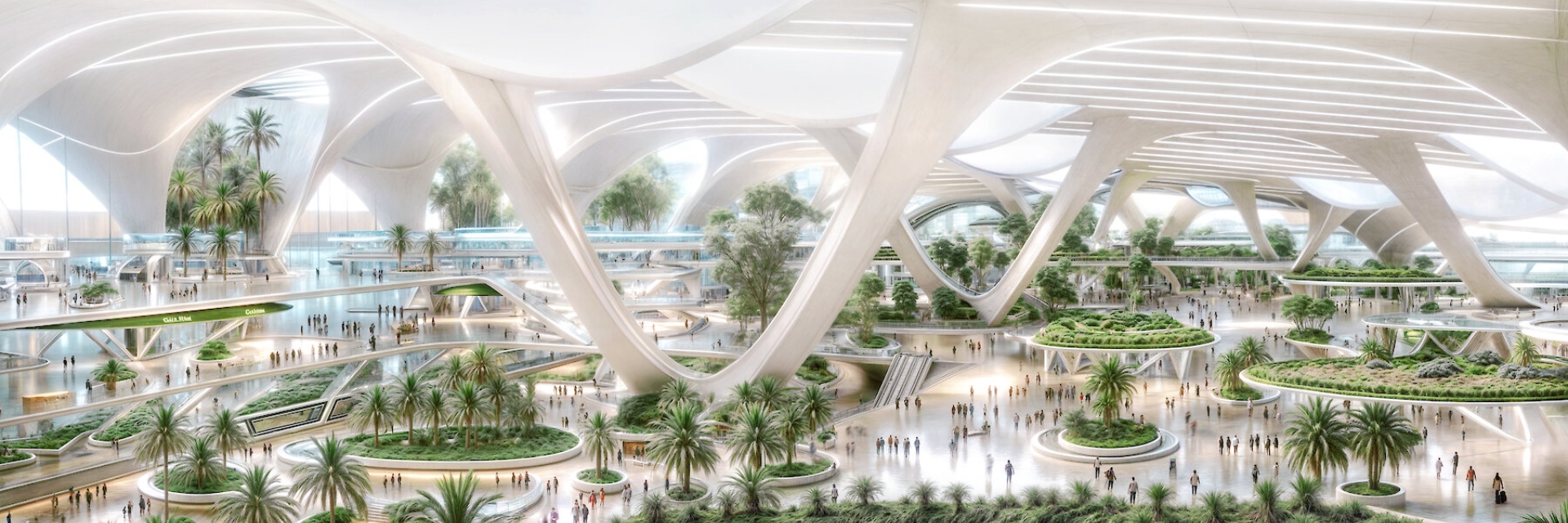
The Impact of Al Maktoum Airport on Dubai’s Property Landscape
Global aviation hubs shape the trajectory of world cities. In Dubai, Al Maktoum International Airport (DWC) is poised to anchor the emirate’s next era of expansion, establishing the southern corridor as a focal point for investment, enterprise and residential growth..
As development shifts south, Al Maktoum Airport (DWC) represents a structural shift in Dubai’s urban geography. As Dubai South evolves into a fully integrated economic zone, the airport’s expansion is influencing where capital flows, where communities form and where long-term value is being cultivated.
Key Takeaways
Al Maktoum Airport at a Glance
Located within the ambitious Dubai South master development, Al Maktoum International Airport was conceived as a next generation aviation and logistics hub designed to serve global markets.
A Strategic Aviation Platform
DWC originally opened its doors for cargo operations on 27 June 2010, followed by the launch of its passenger terminal on 27 October 2013. While it initially supported seasonal charters and general aviation, early expansions increased its capacity from 7 million to 26 million passengers annually, establishing a foundation of large-scale expansion.
Unprecedented Expansion
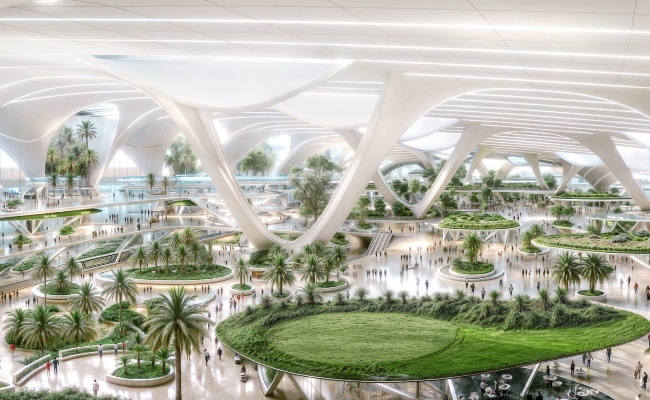
In April 2024, the Dubai Government confirmed Phase Two of the airport’s expansion, solidifying its ambition to create the world’s largest global hub. The roadmap outlines:
- Five parallel runways, enabling simultaneous wide-body operations at scale.
- Passenger capacity of 150 million annually within the next decade, ultimately expanding to 260 million passengers per year.
- Cargo capacity of 12 million tonnes annually, Reinforcing Dubai’s dominance in global logistics.
Aviation-Led Growth and Real Estate Demand
Infrastructure of this magnitude generates a powerful multiplier effect across adjacent districts.
Employee Expansion
Thousands of specialised roles across aviation, engineering, customs, logistics and security are being created.
Sector Growth
Beyond aviation, the airport catalyzes growth in logistics, hospitality, and multinational business services, setting up regional headquarters within proximity to the airport.
Population Momentum
Workforce inflows naturally convert into residential demand, accelerating the formation of integrated communities within Dubai South.
Airport led growth historically drives sustained property cycles, beginning with commercial uptake and progressing towards residential consolidation and capital appreciation.
Residential Market Impact
The DWC expansion reshapes the residential market, boosting demand for mid-market and luxury family housing.
Rise in End-User Demand
Professionals and families employed within aviation and logistics sectors are opting for permanent residences near their workplaces, strengthening owner-occupier activity..
Compelling Entry Points
Compared to mature central districts, communities surrounding DWC offer strategic price positioning with scope for upward movement as infrastructure milestones are delivered.
Since the formal announcement of expansion, Dubai South has recorded tangible uplift. Property values have risen by approximately 25%, rental rates by around 20%, and transaction volumes exceeded AED 15 billion within the first five months of 2025. This performance reflects the clear alignment between state-backed infrastructure and real estate growth
Commercial and Mixed-Use Development Growth
A 24-hour aviation hub requires a complementary ecosystem of commercial and lifestyle assets. Grade-A Office and Logistics Facilities
There is a surge in demand for Grade-A office space and advanced warehousing facilities within the Dubai South Logistics District.
Hospitality and Retail Expansion
Hotels, education institutions, healthcare centres and curated retail destinations are emerging to support both transit passengers and a growing residential base.
Attractive Yield Implications
Commercial assets in this zone often achieve competitive rental returns supported by strong tenant retention and long-term lease structures..
Infrastructure Connectivity and Accessibility
Large-scale aviation infrastructure is strengthened by seamless connectivity. Dubai has prioritised multimodal integration to maximise DWC’s potentia.
Enhanced Road Infrastructure
Upgrades to Sheikh Mohammed Bin Zayed Road and Emirates Road are increasing accessibility and freight efficiency.
Public Transport
Extensions to the Dubai Metro and Etihad Rail network connections will integrate DWC with Jebel Ali Port and central Dubai, creating a cohesive mobility network..
Accessibility and Value
Historically, residential communities located near major transport nodes in Dubai demonstrate stronger capital performance and price stability.
A Strategic Shift in Dubai’s Property Geography
The expansion of Al Maktoum International Airport marks a definitive shift in Dubai's growth corridor. The city’s centre of gravity is extending southwards, anchored by aviation, trade and innovation. For strategic investors, this shift reflects participation in a master-planned economic zone designed to accommodate the world’s largest logistics and transit hub. Premium waterfront and master-community developments within proximity to DWC are positioned to benefit from this convergence of infrastructure, enterprise and elevated living standards.
Dubai’s southern frontier is no longer emerging, it is structurally defined by long-term vision, connectivity and global ambition.