800 NAKHEEL

What Happens to Rainwater in a Waterfront Community? A Homebuyer’s Guide to Drainage Design
In a waterfront community, drainage is not simply an engineering detail hidden beneath roads and landscaping. It affects whether entrances remain accessible during heavy rainfall, whether basements and lower levels are protected from water ingress, and how quickly a development can return to normal operation after an extreme weather event.
The issue became more visible after the UAE recorded its heaviest rainfall since records began in 1949 in April 2024, with the National Centre of Meteorology recording 254.8 mm in less than 24 hours at Khatm Al Shakla in Al Ain. Emirates News Agency Dubai has since continued to invest significantly in stormwater resilience through the AED 30 billion Tasreef programme, designed to increase the emirate’s rainwater drainage capacity by 700% and ultimately manage more than 20 million cubic metres per day.
Key Takeaways
- How Is Rainwater Collected, Directed and Discharged in a Waterfront Residential Community?
- What Site-Level Drainage Features and Overflow Routes Should Homebuyers Inspect Before Purchasing a Coastal Property?
- How Do Finished Floor Levels, Landscape Grading, Drainage Outlets and Storage Systems Reduce Surface-Flooding Risk?
- What Should Buyers Ask About Basement Protection, Pump Systems, Maintenance Records and Performance During Heavy Rainfall?
- How Can Inadequate Drainage Affect Repair Costs, Insurance Considerations, Everyday Access and Long-Term Property Value?
- Why should Drainage Be Part of Waterfront Property Due Diligence
How Is Rainwater Collected, Directed and Discharged in a Waterfront Residential Community?
Rainwater in a waterfront residential community typically passes through several layers of infrastructure. Roof outlets, balconies, terraces and paved areas collect runoff; surface falls and channels guide it towards gullies or drains; underground pipes, storage structures or pumping systems then convey or temporarily manage the water before it reaches an approved drainage point.
Dubai legislation distinguishes rainwater drainage from wastewater infrastructure and requires approval for water discharged into the rainwater network. It also recognises drainage basins and, under controlled circumstances, direct discharge to the sea.
Dubai’s investment in Tasreef demonstrates the scale of the city’s long-term stormwater management requirements . Dubai Municipality states that the programme is intended to create an integrated, future-ready network, with phased completion planned by 2033.
What Site-Level Drainage Features and Overflow Routes Should Homebuyers Inspect Before Purchasing a Coastal Property?
A buyer does not need to conduct a full technical drainage assessment, although certain visible features can indicate how deliberately water movement has been considered within the property and wider community.
Homebuyers should examine drainage channels around driveways and entrances, road gullies, balcony and terrace outlets, slopes around buildings, basement ramps and low points where runoff could accumulate. Buyers can also ask where water travels if the primary system temporarily reaches capacity.
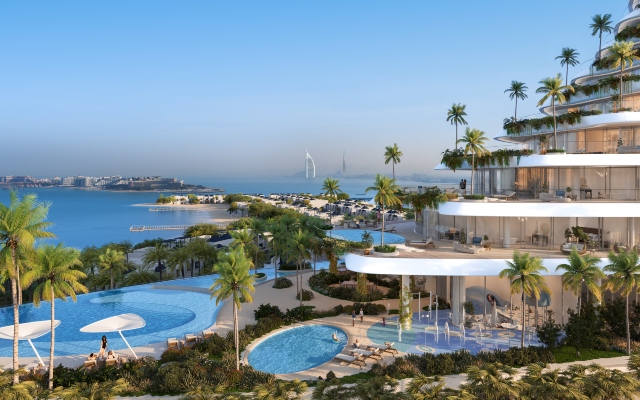
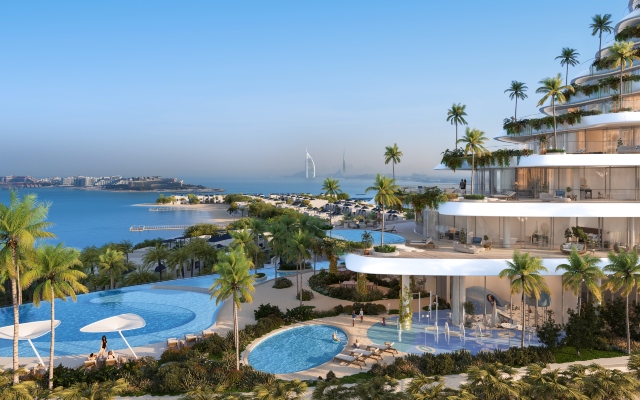
This is particularly relevant in master-planned residential communities in Dubai, where roads, parks, pedestrian routes and private plots function as one connected system. For example, Nakheel’s Dubai Islands combines five islands with more than 60 kilometres of waterfront, over 20 kilometres of beaches and extensive open spaces. At this scale integrated drainage and infrastructure planning supports not only individual buildings but also safe, reliable everyday movement across the wider destination.
How Do Finished Floor Levels, Landscape Grading, Drainage Outlets and Storage Systems Reduce Surface-Flooding Risk?
Drainage resilience is partly determined by levels and landscape design. Where external surfaces are appropriately graded, runoff moves away from vulnerable entrances instead of towards them. Raised thresholds and carefully positioned finished floor levels add another layer of protection, while drainage outlets help remove and manage accumulated runoff. .
Storage or attenuation systems can provide additional capacity by temporarily holding runoff rather than requiring the entire volume to leave a site immediately.
What Should Buyers Ask About Basement Protection, Pump Systems, Maintenance Records and Performance During Heavy Rainfall?
Basements require particular consideration because underground parking, plant rooms and storage areas can sit below surrounding ground levels. Buyers should establish how rainwater and surface runoff are prevented from entering ramps and other openings and whether low-level areas depend on pumps, sumps or backup systems.
Useful waterfront property due-diligence questions include:
- Where are the site’s lowest points and emergency overflow routes?
- Which areas rely on pumps, and what backup power or redundancy is provided?
- How frequently are drains, gullies, pumps and storage systems inspected and cleaned?
- Have there been previous incidents of water accumulation or ingress, and what corrective work followed?
Can the developer or building management provide drainage plans, maintenance records and evidence of system testing?
Regular maintenance remains essential, as calculated design capacity alone does not guarantee effective drainage performance. Blocked outlets, accumulated sediment or poorly maintained pumps can reduce the effectiveness of an otherwise well-designed system. Nakheel, for example, states that its sustainability approach includes reviews, inspections and audits of operational and maintenance activities across its communities.
How Can Inadequate Drainage Affect Repair Costs, Insurance Considerations, Everyday Access and Long-Term Property Value?
Inadequate drainage can generate costs extending beyond the repair of visible water damage. Repeated water ingress can affect finishes, building services and basement areas, while surface accumulation can interrupt vehicle and pedestrian access. For an income-producing property, disruption can also influence tenant experience and operating expenditure.
Climate exposure is therefore an important consideration in waterfront property and wider real estate asset analysis. The Central Bank of the UAE’s 2024 climate-risk scenario analysis assessed more than 100,000 residential and commercial properties and used flood depth-damage relationships to estimate potential economic losses. It found that coastal flooding represented a higher tail risk in its scenarios and highlighted resilient infrastructure, flood defences and improved property-level insurance coverage among measures for reducing future losses.
That does not mean waterfront property should automatically be considered high-risk. It means drainage design, asset-specific exposure and insurance terms through informed due diligence rather than making assumptions based solely on a property’s location. Buyers using finance should also note that Central Bank rules require banks to have procedures for monitoring whether eligible residential property used as collateral is adequately insured against damage.
Why should Drainage Be Part of Waterfront Property Due Diligence
Premium waterfront property is often assessed through architecture, views, privacy and access to the coast. Yet the quality and resilience of its underlying infrastructure merit equally careful consideration. . The strongest drainage strategies combine sensible site levels, controlled runoff routes, adequate collection capacity, protected lower levels and disciplined maintenance.
For buyers evaluating long-term ownership, drainage should therefore be treated as part of asset quality rather than a technical afterthought. Explore Nakheel’s waterfront communities and consider how infrastructure, master planning and long-term liveability work together when selecting a waterfront home.