800 NAKHEEL

How Long-Term Urban Planning Protects Property Value Across Market Cycles?
Across property cycles, price resilience is rarely luck. It is often the outcome of planning certainty: what can and cannot be built, when infrastructure is delivered, how the public realm is maintained, and whether the district continues to attract end-users and tenants when sentiment softens.
In Dubai, where residential markets have shown strong growth in recent years (for example, ValuStrat reported a 27.5% annual increase in residential capital values in 2024), the key investor question extends beyond shortterm upside to what protects value when the market normalises.
Key Takeaways
- What is Long-Term Urban Planning in Real Estate?
- Why Planning Horizon Is a Core Investor
- The Planning Levers That Protect Pricing Power
- How Communities Stay Liquid in Softer Markets
- Why Planning Discipline Supports Long-Term Rental Competitiveness
- What to Look For in a “Planning-Led” Investment Thesis
- Planning is the Hidden Layer of Value Protection
What is Long-Term Urban Planning in Real Estate?
Long-term urban planning refers to the coordinated framekwork for design, land-use regulation, infrastructure sequencing, mobile capacity, and amenity delivery that guides how a district evolves over decades, not merely how it performs at launch.Why Planning Horizon Is a Core Investor
Market Cycles vs Asset Durability, What Planning Controls
Market cycles move on macro variables, including liquidity, interest rates, global demand, and supply timing. A planning horizon works on different fundamentals: it shapes the durability of demand through land-use control, mobility capacity, amenity depth, and overall quality of place. This matters because Dubai has experienced multiple identifiable cycles (for example, the post-2008 adjustment and the 2014 peak visible in long-run indices), demonstrating that exit liquidity and pricing power are most rigorously tested in softer phases. .
The Value-Protection Mechanism: Certainty, Scarcity, And Quality of Place
Long-term planning protects value through three linked mechanisms:
- Certainty: Fewer “surprise negatives” such as access constraints, missing amenities, or delayed infrastructure delivery.
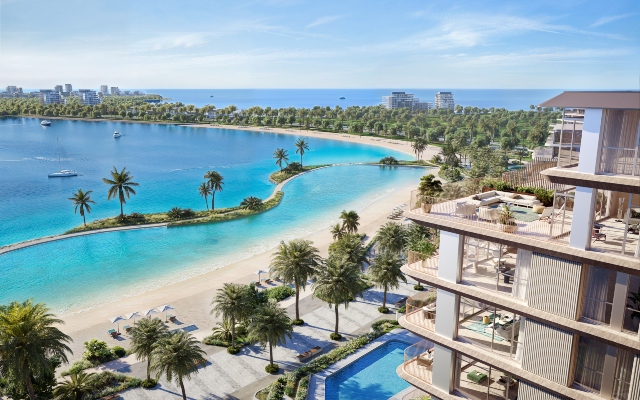
- Scarcity: Protected waterfront edges, view corridors, and controlled adjacent development reduce substitutability.
- Quality of place: Consistent public realm and liveability support premium demand, even when broader inventory competes on discounts.
The Planning Levers That Protect Pricing Power
Land-Use Discipline and Controlled Supply
Phasing Strategies That Prevent Oversupply Within a Single District
Phasing is a supply management tool that spreads delivery so the district does not compete with itself within a single market window, supporting absorption and reducing “forced pricing” during weak sentiment. This becomes more important in periods of weaker sentiment. This becomes more important when analysts flag supply risk as a contributor to potential price softening.
Protecting View Corridors, Waterfront Edges, and Low-Rise Buffers
Where planning codifies protected edges (waterfront access, setbacks, height transitions), it reduces the risk that a prime unit’s differentiator is later diluted. The investor takeaway is simple: a protected attribute sustains pricing power because it remains scarce.
Infrastructure-First Delivery
Road Capacity, Transit Readiness, and Access Hierarchy
Infrastructure is a demand multiplier. Projects designed around clear access hierarchies (primary/secondary roads, last-mile circulation, and coherent parking strategies) reduce friction and widen the pool of “daily feasible” residents and tenants.
Amenity Planning That Sustains End-User Demand
Schools, Retail Mix, Healthcare, And Daily-Need Convenience
Amenities that support everyday living such as education, healthcare, groceries, services, increase retention and reduce churn, two variables that support rents and resale velocity.
Parks, Open Space Ratios, And Walkable Catchments
Dubai’s long-horizon planning agenda places increasing emphasis on publicrealm quality and access to open space. Official planning materials highlight the expansion of public beaches and broader liveability goals under Dubai’s long-term urban planning frameworks.
How Communities Stay Liquid in Softer Markets
In softer markets, liquidity concentrates where daily access is easiest and where districts remain functionally relevant beyond lifestyle positioning. . Mixed-use gravity (jobs, retail, services, hospitality) supports multiple demand pools, which can help stabilise absorption.Why Planning Discipline Supports Long-Term Rental Competitiveness
Liveability Drivers That Sustain Leasing Velocity
Leasing velocity tends to stay healthier where a district reduces daily friction: commutes, parking, walkability, shade/comfort, and services. Over time, this supports rent stability because the home competes on experience and convenience, rather than price sensitivity alone. .
Product Diversity That Broadens the Buyer/Tenant Base
A planned mix (unit sizes, typologies, price points) reduces reliance on one buyer segment. When one segment pauses, another can keep the market moving, supporting liquidity and pricing.
What to Look For in a “Planning-Led” Investment Thesis
Investors should look for:
- Phasing clarity what delivers when, and what comes later
- Infrastructure sequencing roads, access, utilities, mobility readiness
- Protected future plots limited risk of competing development where openness or views are the value driver
Planning is the Hidden Layer of Value Protection
Long-term urban planning protects property value by engineering certainty (lower execution risk), scarcity (protected differentiators), and enduring demand (liveability and amenity depth), the same factors that matter most when the market turns from momentum to selectivity. For investors assessing cycle resilience, the best question is how resilient a place will be a decade from now, not how it performs at a single point in the cycle.
To explore planning-led communities built around long-horizon place value, investors can discover Nakheel’s master-planned destinations and evaluate them through a planning-first investment lens.